
Regulation and Recovery for Living Well Under Pressure
Individually designed work to help you remain well, clear-minded and connected to yourself as the demands of work and life grow.
Intelligently Designed Regulation and Recovery
As the demands of work and life grow, the question isn’t always how to reduce them. It is how to grow your capacity to meet them while staying connected to yourself and the life you have beyond your roles and responsibilities.
Staying well under demand does not happen automatically. It happens by design.
The BodyMindBrain approach starts by understanding the relationship between the demands in your life, how well you recover and detach, and how effectively you regulate your responses under pressure.
From there, the work is practical: strengthening the foundations that allow energy, drive, clarity and capacity to hold over time.
The aim is to help you respond, recover and adapt more effectively, so that your ability to stay well despite demands remains sustainable.

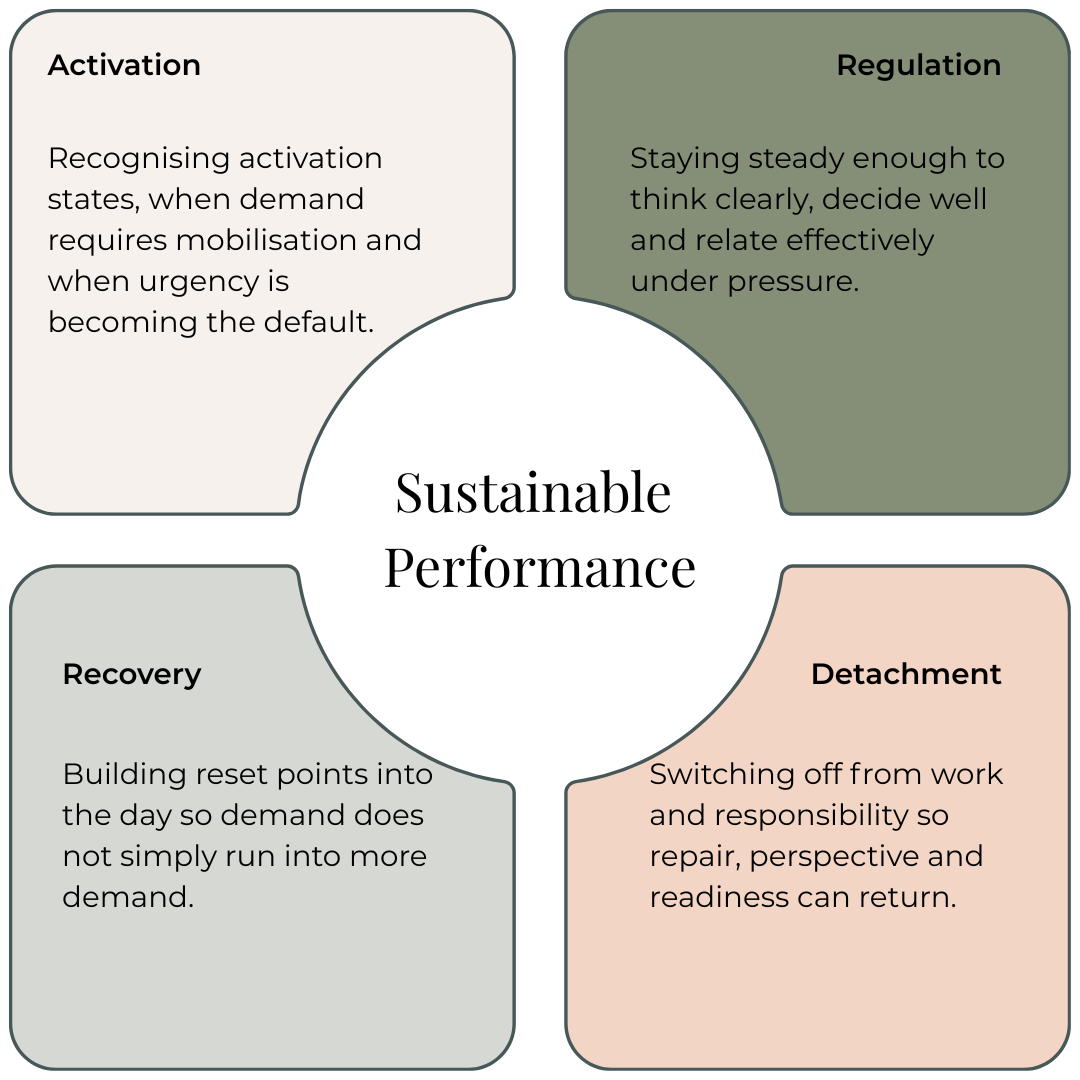
The Capabilities This Work Develops
How We Begin
The work starts with a broad view of you as a whole person: the demands you are carrying, your patterns of stress and recovery, and the factors that may be supporting or limiting your capacity. This understanding shapes everything that follows.
Start Here:
Learn more about the Performance & Recovery Deep Dive →
Beyond The Deep Dive
Following the Deep Dive, some people choose a focused period of work around a specific challenge, while others prefer ongoing work as they build greater capacity and navigate changing demands over time.
The work is tailored to the individual and may draw on psychology, recovery science and practical approaches to strengthening regulation, recovery and sustainable performance. Where appropriate, I also work alongside or refer to other trusted professionals whose expertise contributes to a wider recovery and performance strategy.
This was very detailed, and Nicola looked into areas I hadn’t considered that were part of the problem. The assessment enabled me to reassess priorities and take action on prioritising my health, not just my business.