Executive Burnout & Nervous System Recovery

Specialist Recovery Strategies Based on Nervous System Knowledge

Executive Burnout and Nervous System Recovery

For Ambitious Adults Under Prolonged Stress

Many of my clients tell me stories in metaphor.
They describe suits of armour, checking in their personality at the office door, facing into the battle, and exhaustion.

They’ve been good at applying high standards, but somewhere along the way, something was sacrificed. Often, it was their own energy, health and happiness.

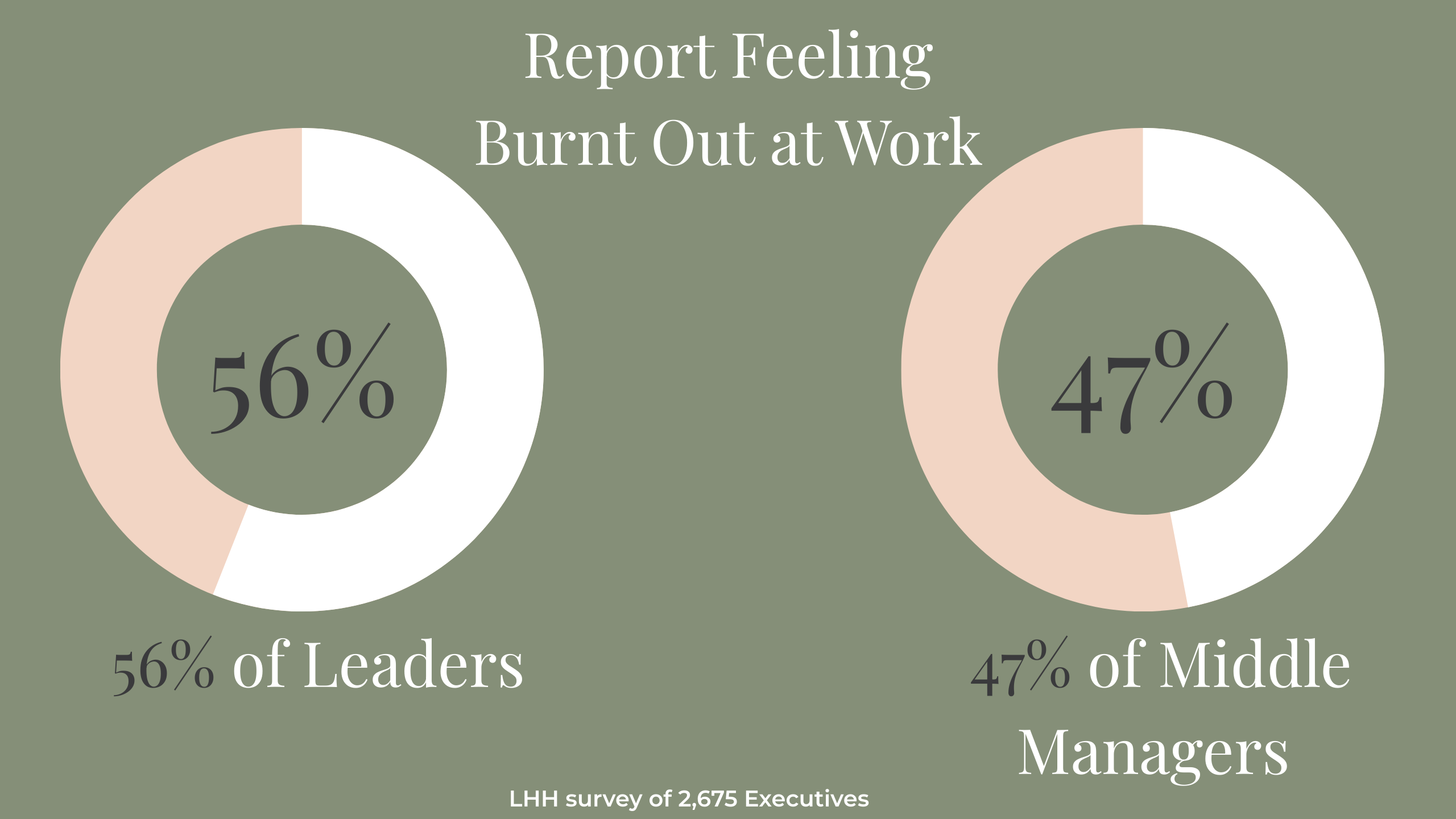
Their stories are mirrored in the statistics. Globally, over half of employees say they feel stressed “a lot of the day”, and leadership research suggests this is higher among leaders. Around seven in ten report that their stress has increased since stepping into their current role.

If you’re leading a team, business, or practice and feel more strained than you used to, even when things look “fine” on paper, you’re not alone. Your nervous system has likely been working at capacity for longer than it can sustainably manage.

The Neuropsychology of Burnout

How Executive Burnout Affects the Brain and Body

When stress is short-lived, your heart rate rises, breathing changes, blood flow moves toward muscles, and your brain shifts attention to what’s most immediately important. After the challenge, your system is meant to come back to baseline.

With prolonged responsibility and pressure, that baseline isn’t always reached:

  • The threat-detection centres of the brain become more active and more sensitive.

  • The prefrontal cortex, the part of the brain that supports planning, working memory, perspective-taking, and weighing up options, becomes harder to access under strain.

  • Stress hormones like cortisol stay elevated for longer, subtly changing sleep, immune function, digestion, and energy availability.

  • Your nervous system starts to prioritise “survival” over repair, creativity, and long-term health.

Over time, this doesn’t just feel like stress. It becomes business as usual: faster to activate, slower to recover.

For some, it is fatigue or irritability that precedes the burnout phase. If fatigue, brain fog or reduced resilience are big themes for you, you may also find my Fatigue and the Nervous System guide helpful.

How Stress Changes the Way You Think and Relate

The effects of stress on the brain and behaviour are well documented, and when thinking about executive burnout, it explains fully why work and team performance suffer over time. In high-stress working conditions, I often see the same cognitive and relational shifts:

  • Narrowed focus – with more attention being paid to short-term solutions rather than long-term strategy.

  • Impaired Memory – access to working memory reduces under stress
  • All-or-nothing thinking – Under pressure, the brain tends to flip into black-and-white patterns: the urgency that stress creates gives less time for thinking about nuance.

  • Reduced cognitive flexibility – It feels harder to change tack, consider alternatives, or sit with uncertainty. You may find yourself looping the same thoughts or defaulting to familiar solutions even when they’re not working.

  • Reduction of interpersonal openness and trust – chronic stress leads individuals to become self-protective and less co-operative.

These changes are normal adaptations under prolonged stress and are signs that your brain is working in survival mode.

You can read more about how stress changes the brain and thinking in our post: The Psychology of Stress and Performance

Psychological Yet Nervous-System-Led Coping Styles

Your coping style under stress isn’t just “personality”. It’s deeply shaped by how your autonomic nervous system is responding in the background, automatically. This is a hidden driver of psychology that many people don’t acknowledge.

Three broad patterns show up frequently in executive burnout. Diagnosing your coping styles is a key step in breaking the cycle.

1. Anxiety and Overcompensation – The Over-Driver

Here, the nervous system is tilted toward fight/flight activation and a sense of urgency that is hard to let go of.

This is often typified by being a good firefighter, displaying heroics, taking on extra responsibilities, liking to be in control and ahead of the game.

This pattern often brings praise – “reliable, driven, committed” – while quietly draining your system.

2. Seemingly Coping, but Working Very Hard Underneath – The Hidden Striver

This pattern is a mix of ongoing activation with a layer of containment on top and produces a mismatch between how you appear and how you feel.

This is the classic “swan”: composed above the water, paddling hard below. It’s a sophisticated coping strategy that keeps everything going at a high personal cost.

3. Disconnection and Shutdown – The Numb Survivor

Here, the nervous system begins to lean toward shutdown as a way of conserving energy. Many people I see here express a sense of confusion about being able to go through the motions but feel unable to describe how they really feel.

It’s your system’s way of turning down the volume to protect you from overwhelm, but can also be like throwing out the baby with the bathwater because what protects from overwhelm also disconnects from joy.


You can read more about nervous system-led ways of coping here in our post on: Polyvagal Theory for Stress and Performance

If you’re recognising yourself in this
If parts of this page feel familiar, that’s often the moment people reach out. We can use an initial consultation to map what’s happening in your system and decide whether a 6-Week Reset, weekly combined sessions, or another route would be the best starting point.

How BodyMindBrain Helps you Recover From Burnout

Burnout is both psychological and physiological, so recovery must be integrated.

It lives in:

  • The stories you tell yourself

  • The habits and roles you’ve learned to occupy

  • The way your brain allocates attention and energy

  • The way your nervous system, mitochondria, and muscles manage demand and recovery

That’s why BodyMindBrain offer support to all these pieces.

  • Understanding the patterns and behaviours that unintentionally feed into burnout.

  • Supporting the body and brain to return to stasis and out of a prolonged stress response.

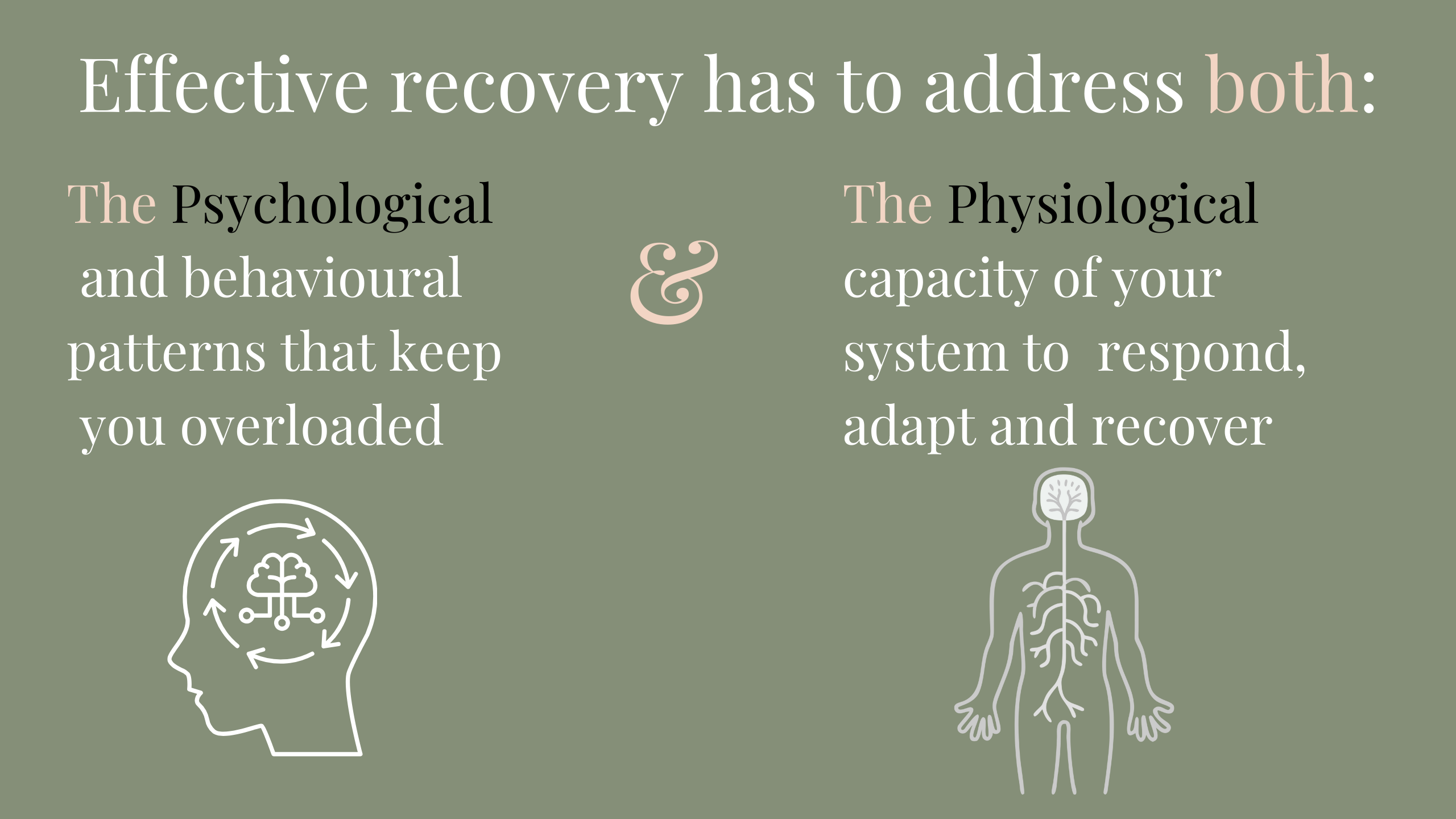
Effective recovery has to address both:
The psychological patterns that keep you overloaded

AND

The physiological capacity of your system to respond, adapt, and recover

Psychological Solutions: Understanding Patterns and Reducing Overload

On the psychological side, BodyMindBrain focuses on:

  • Making your patterns visible

  • Reworking beliefs and habits that quietly drive burnout

  • Designing realistic structures that reduce load, share responsibility

  • Prioritise recovery, find ways to increase sense of agency

  • Building a different internal relationship with yourself

 This process supports your ambitions while learning to hold them in ways your nervous system can actually sustain.

Physiological Solutions: Neuroregulation, Energy and Metabolic Flexibility

Psychological insight lands more deeply when the body and brain are supported to recover and handle demand more efficiently.

At BodyMindBrain, we combine psychological work with targeted physiological training using the technologies we offer in-house:

  • Neuroregulation
    We use Neurofeedback to train your brain to practise more efficient, stable patterns of activity. Over time, this can support:

    • Better sleep and recovery

    • Reduced reactivity and anxiety

    • Improved focus and clarity

  • Energy systems and metabolic flexibility
    We use IHHT (intermittent hypoxic–hyperoxic training) and targeted breathing work aim to:

    • Improve how your cells use oxygen

    • Enhance resilience to physiological stress

    • Support a more adaptable stress–recovery cycle

  • Strength, posture, and movement
    We use Whole-body EMS, strength building and cardiovascular training:

    • Build strength with minimal time cost

    • Support posture and breathing mechanics

    • Give your nervous system new, safer movement options rather than default tension and bracing

Together, these approaches help your system perform and recover differently, not just think differently.

Bringing It All Together: From Insight to Structured Change

Understanding why you feel the way you do is an important first step. But on its own, insight rarely changes a nervous system that’s been running on high alert for years.

What makes the difference is having a clear, contained process where:

  • You’re not carrying all the responsibility for fixing this alone

  • Psychological patterns and nervous system states are worked with together

  • There is enough structure to create change, and enough flexibility to respect your real life

This is why we don’t offer one-off “quick fixes” for burnout. At BodyMindBrain, we use focused programmes and a multi-modal approach, combining psychology, nervous system training and advanced technologies, to give your system the time, repetition, and support it needs to genuinely reorient towards recovery.

Depending on your situation, we may work together through a focused 6-Week Reset, or through ongoing weekly integrated sessions. We’ll decide this together in an initial consultation.

Your next step: The Recover & Rebuild Pathway

If you recognise yourself in this page, the next step is to explore the Recover & Rebuild pathway. This is where we bring together psychology, nervous system training, and physiological tools to help you move out of survival mode and rebuild capacity in a structured way.

6-Week Nervous System Reset

For recovery from prolonged stress, burnout, and “tired but wired” patterns

The Reset is a six-week, in-person programme in Hove designed for adults who are still functioning on the outside, but feel worn down, wired, or disconnected on the inside. This is a structured programme combining psychology and physiology to help you reset from the inside out.

Get Started

ARE YOU READY TO REBUILD CAPACITY?

I’d love to connect with you for an initial consultation to understand what you’re dealing with and explore whether a 6-Week Reset, weekly integrated sessions, or a tech-only package would be the best way forward.

12 + 12 =

Find me at:

BodyMindBrain

Top floor

60 Lansdowne Place

Hove, BN31FG

Phone me on: