Stress and Overwhelm Support in Brighton and Hove
For busy adults who feel stretched, reactive, or unable to switch off, even when you’re still functioning
Stress and overwhelm are often normalised in high-demand lives. You keep going, you keep coping, and on the surface, you may look fine.
But internally, you feel more tense, more reactive, more tired, or more “wired” than you used to. The smallest things can tip you over. Switching off feels harder. Recovery doesn’t fully restore you.
This page will help you recognise the pattern, understand what sustains it, and how to start working with me in Brighton & Hove.
Signs of stress overload and overwhelm
You may recognise yourself in some of these:
- You’re constantly “switched on,” even during downtime
- Your mind is busy: planning, scanning, anticipating, replaying
- You feel easily irritated, tearful, snappy, or emotionally reactive
- You get overwhelmed by small decisions or everyday tasks
- You’re coping externally, but internally you feel strained or close to the edge
- You can’t properly switch off at night, or sleep feels lighter and less restoring
- Your body feels tense: jaw, shoulders, chest, stomach, shallow breathing
- You feel like you’re carrying too much responsibility
- You have less patience at home because work has taken your bandwidth
- You recover more slowly than you used to
If this feels familiar, the issue is rarely lack of willpower. It is often that demand has exceeded recovery for long enough that your system has become stuck in “high alert.”
What stress and overwhelm actually are
Stress is a normal biological response that helps you mobilise energy and meet challenge.
Overwhelm often appears when:
- demand is sustained
- recovery is insufficient
- and the system has too little time to return to baseline
In other words: stress becomes a problem when it is no longer cycling well.
This is why people can be doing all the “right” things—exercise, productivity tools, mindset work—yet still feel internally overloaded.
What does overwhelm feel like in real life?
People often describe:
- a constant sense of urgency or internal pressure
- feeling mentally full
- tension in the body that never fully releases
- irritability, impatience, or overreaction that doesn’t feel like “you”
- moments of zoning out or feeling numb
- reduced capacity for noise, conflict, mess, or demands
- wanting space, but also struggling to create it
Overwhelm is not only emotional. It is physiological. It is the body’s way of saying: “This is too much for too long.”
Why stress becomes sticky: the stress–recovery imbalance
Two patterns usually interact:
1) Psychological drivers that increase load
- responsibility bias (“it’s on me”)
- high standards and perfectionism
- difficulty saying no
- self-criticism as a motivator
- chronic mental rehearsal and overthinking
2) Stress physiology that keeps the system activated
When the nervous system spends too much time mobilised and too little time in true recovery, it becomes harder to downshift—so you can feel tense, restless, vigilant or reactive even when nothing is urgently wrong.
This is why “just relaxing” if often not enough.
Stress vs anxiety vs burnout: which one fits you?
These labels overlap, but here is a practical distinction:
- Stress & overwhelm: you’re overloaded and reactive, but recovery still works sometimes.
- High functioning anxiety: you’re performing well, but running in fight/flight (vigilance, over-control, worry, tension).
- Burnout: recovery stops working; capacity narrows; energy, mood, and performance become harder to sustain or stop.
- Sleep difficulties: sleep becomes fragile, winding down is hard, broken nights, waking unrefreshed.
- Fatigue: energy becomes unreliable—crashes, brain fog, reduced tolerance.
If one of these is clearly dominant, you may want to start with that page instead:
How to deal with stress and overwhelm
Most people try to solve overwhelm by pushing harder or becoming more efficient. That often increases load.
A more effective approach is to work on two fronts:
1) Reduce load strategically
This means identifying:
- where responsibility can be shared
- what is self-imposed vs genuinely required
- which decisions and habits keep the system in urgency mode
- what needs to be stabilised first (sleep, boundaries, recovery rhythms)
2) Restore downshift reliability
The goal is not “no stress.” The goal is:
- less reactivity under pressure
- faster recovery after stress, automatically
- better sleep depth and restoration
- steadier energy and clearer thinking
This requires both psychological and physiological work.
How BodyMindBrain helps you with Stress and Overwhelm
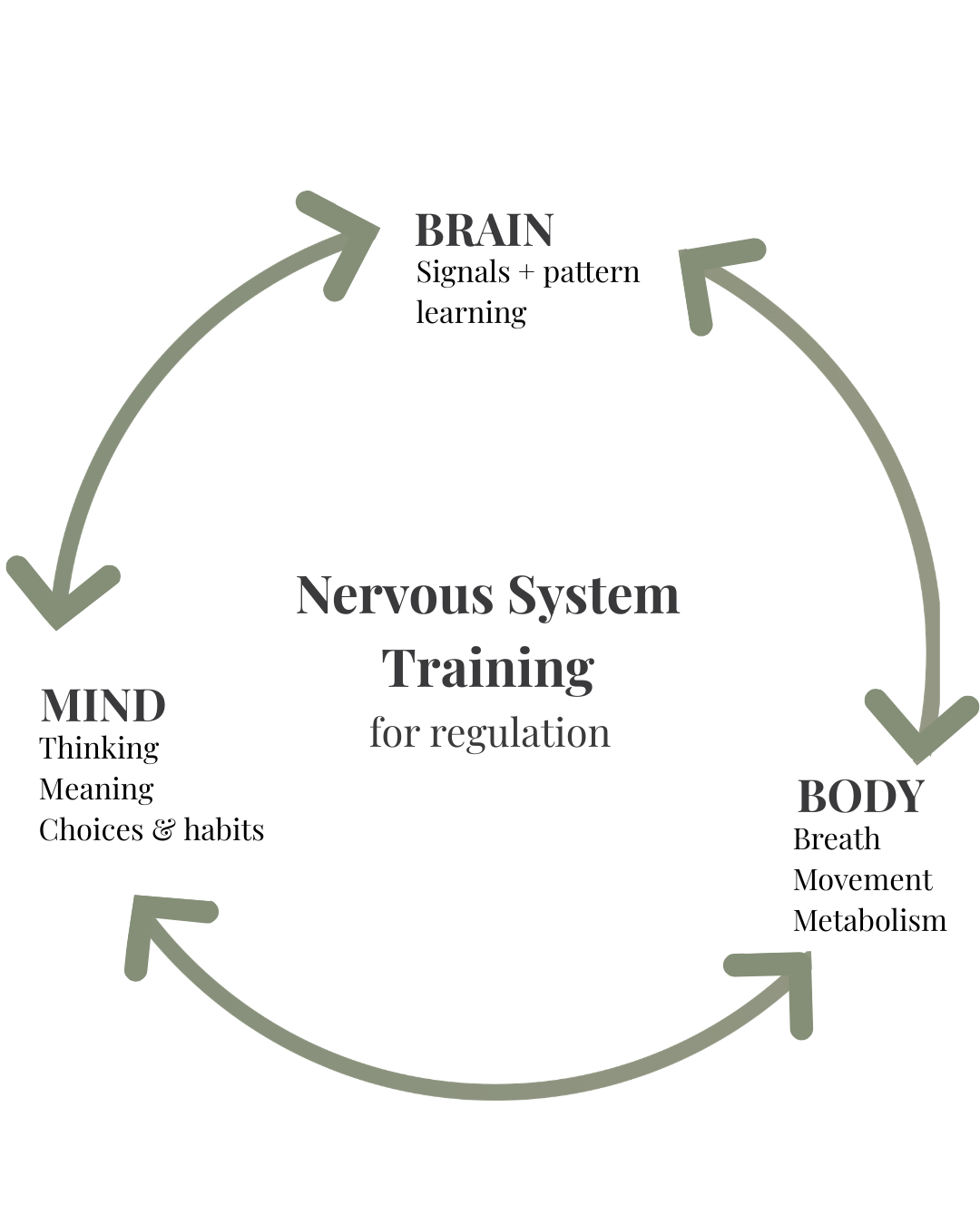
Stress overload is psychological and physiological, so recovery must be integrated.
This work focuses on:
- the patterns and beliefs that keep you overextended
- the nervous system states that maintain tension and reactivity
- the body’s recovery capacity (sleep quality, energy stability, stress tolerance)
- building a more resilient operating system for real life
This is not about becoming less ambitious. It’s about becoming more sustainable and more in command of your responses.
Psychological support: reduce overload and change sustaining patterns
On the psychological side, we work on:
- making your patterns visible (especially the ones you’ve normalised)
- reducing perfectionism-driven load and chronic internal urgency
- building boundaries and decision structures that lower strain
- improving emotional regulation under pressure
- developing a calmer internal relationship with yourself—so you stop living in constant self-management
This is practical, present-focused work aimed at changing how you operate day to day.
Physiological support: regulation, recovery capacity, and embodied resilience
Depending on your needs and suitability, we may integrate:
Neurofeedback (neuroregulation)
To support steadier brain and central nervous system activity linked with improved recovery, better stress regulation, and clearer cognition.
IHHT / Altitude Training (recovery capacity)
To support physiological resilience and help the system become more adaptable under stress.
EMS, strength and movement-based work (capacity and embodiment)
To rebuild strength and reduce bracing patterns so that everyday life generates less “effort signal” and feels more manageable.
Together, this approach helps your system recover and perform differently, not just cope better.
Not sure where to start?
I offer a small number of first-step options: mind, behaviour and lifestyle-led, physiology/tech-led, and programme/home routes, to help you build resilience and capacity for life’s demands.
About BodyMindBrain:
At BodyMindBrain, we help motivated adults with high-demand lives build strength, energy, and resilience by training the body, brain, and mind as one integrated system.