
What You’ll Learn About Fatigue and The Nervous System
In this post, you’ll discover:
-
Why fatigue is not simply about “low energy” or poor sleep, but a protective mechanism of the nervous system.
-
How your brain balances effort and motivation, and why this negotiation determines when you feel tired.
-
The role of mitochondria and cellular health in shaping how much strain your body signals to the brain.
-
Why fatigue can vary so much and what that reveals about energy regulation.
-
Practical strategies to work with your nervous system:
-
Strengthening your body and energy systems.
-
Managing effort, stress, and recovery cycles.
-
Realigning motivation and purpose to unlock more capacity.
-
By the end, you’ll see fatigue in a new way: a nervous system process you can train, regulate, and optimise for greater performance and resilience.
Many of the people I work with describe a familiar pattern: they can hold things together for a long time and then, often suddenly, they hit a wall.
Recent research across medical, psychological and sports science suggests that fatigue isn’t only a reaction to what’s happening now. It’s also your nervous system’s prediction of how long the current level of pressure or demand is likely to last.
When your system anticipates a long haul, it begins to hold energy back, as energy management. That’s when you see not just tiredness, but a cluster of signals: brain fog, irritability, emotional flatness, reduced resilience, and slower recovery.
This article is about understanding that process and how to work with your nervous system, rather than fighting against it.
Fatigue as a Prediction, Not Just a Reaction
Your nervous system doesn’t just react to what’s happening right now. It constantly scans:
-
How much effort things feel like
-
How motivated you are to keep going
-
How your body is coping (heart rate, breathing, muscle strain, sleep, recovery)
-
How long it expects this level of demand to continue
Based on that, it makes quiet decisions in the background:
-
“Can I keep going like this?”
-
“Is this worth the effort?”
-
“Do I need to hold something back for later?”
When the prediction is that pressure will be long-lasting, your system starts to conserve. It may do this by:
-
Making effort feel heavier than it “should”
-
Withdrawing some of your usual drive or energy
-
Increasing the sense of fatigue, fog or irritability
That means that your nervous system has looked at the load you’ve been carrying, predicted that it will be long-lasting, and decided to protect you by restricting access to your full capacity.
Fatigue as self-protection
Think of fatigue as the result of the relationship between effort and motivation, overseen by the brain. An interaction between your conscious drive and unconscious bodily regulation.
- Effort signals come from muscles, organs, and energy systems, telling the brain how hard things feel.
- Motivation signals reflect your goals, needs, and drive to continue.
When effort outweighs motivation, your nervous system steps in and generates fatigue, a kind of protective brake that slows you down. If you have no motivation to do something, then your brain and nervous system perceive this as an energy drain and inefficient.
This explains why fatigue can feel so variable: sometimes you feel drained after a day at the desk, while other times you can push through intense exertion if the situation demands it. It’s not just about physical fuel; it’s about how your brain is interpreting and prioritising signals alongside your conscious motivation.
Beyond Fatigue: Other Ways Your System Conserves Energy
When your nervous system is in “long-haul” mode, it doesn’t only create tiredness. It uses a whole range of experiences to slow you down and limit how much you take on. Common ones include:
-
Brain fog: reduced clarity, slower thinking, difficulty holding details in mind. Your system is reducing cognitive load.
-
Irritability and low frustration tolerance: becoming snappy or overwhelmed by small things. A way of pushing back against extra demands.
-
Emotional flatness: feeling detached, numb or “on autopilot.” This is often your system trying to reduce emotional energy expenditure.
-
Lower motivation: tasks that used to feel easy are now much harder. Your nervous system is marking them as “too costly” under current conditions.
-
Inconsistent resilience: some days you can manage fine, other days the same tasks feel impossible. Prediction is constantly updating based on sleep, stress, support and context.
Seen through this lens, these experiences are not personal flaws. They are your body–brain system trying to protect you from running on empty for too long.
The Nervous System: Energy Gatekeeper
Think of the nervous system as a gatekeeper of performance. It doesn’t just allow unlimited access to your energy reserves; it carefully manages release to keep you safe.
- In normal conditions, it regulates output when effort feels high to conserve energy.
- In urgent or highly motivating situations, it can temporarily lift those restrictions (the “final sprint in the marathon” effect).
- Under chronic stress, it can misread signals, applying the brake too early and leaving you drained because your body and brain have gone into self-preservation.
Fatigue, therefore, can be seen as a protective mechanism. Your brain has determined that the effort vs. the motivation are out of balance, and that the task is a potential drain, so energy supply is restricted.
In this way, when regulation goes off balance, especially after acute or chronic stress, you can feel trapped in cycles of fatigue and recovery struggles.
Why Energy Supply Still Matters
Research from across disciplines suggests that fatigue isn’t just about running out of energy; but that doesn’t mean energy systems are irrelevant. In fact, your cellular health and metabolism directly shape the signals your brain receives.
- When mitochondria are inefficient, your body has to work harder for the same output. This generates stronger strain signals, which travel upstream to the brain. The nervous system then applies the “fatigue brake” earlier.
- When mitochondria are healthy and oxygen use is efficient, the same task feels easier because fewer strain signals are triggered. As a result, the nervous system delays fatigue and allows you to perform longer.
So while mitochondria don’t decide when you feel tired or energetic, they play a powerful role in providing energy and shaping the brain’s calculation of effort. In other words, the better your energy systems function, the more freedom your nervous system has to release your full capacity.
Working With Fatigue To Regain Performance
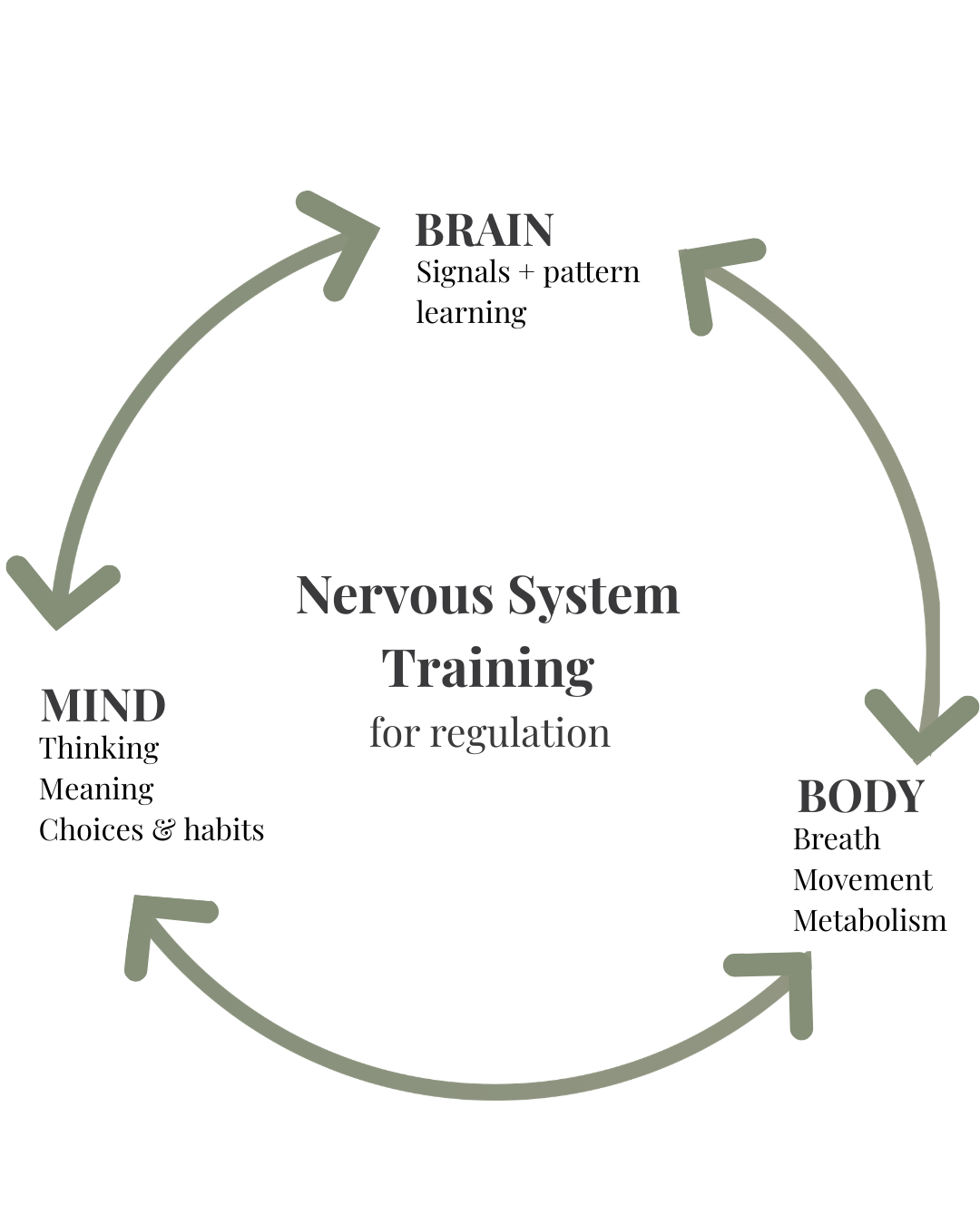
If fatigue is the nervous system regulating effort versus motivation, then the way forward isn’t simply “pushing harder” or “resting more.” Instead, it’s about helping your body and brain find a better balance. Three key levers make the difference:
1- Look After Your Energy Systems
Your mitochondria, oxygen efficiency, nutrition, strength and fitness as well as rest cycles, all shape how much strain your body signals to the brain. The healthier and more efficient these systems are, the less effort everyday tasks feel. This means:
-
- Supporting mitochondrial health
- Strength and fitness training
- Prioritising sleep, nutrition and recovery strategies, so your body can replenish effectively.
- Training Functional Breathing Patterns
2- Manage Effort and Stress Signals
Chronic stress and poor recovery distort the body–brain feedback loop, so the nervous system applies the fatigue brake too soon. Training your nervous system to recalibrate makes effort feel lighter and recovery faster. This can be done with:
-
-
Use technology to assist with nervous system training
-
Plan and structure work into focused blocks
-
Take micro-breaks and longer breaks
-
Use simple down-regulation tools (breathing, movement)
-
Build awareness of how stress builds in your body
-
3- Line-up Motivation and Purpose
Since motivation is the other side of the fatigue equation, a clear vision and purpose matter. When your goals and energy are in sync, your nervous system is more willing to release capacity. This means:
-
- Clarifying your priorities so that effort feels meaningful
- Have a vision of where you are going
- Maintaining perspective when completing mundane or less interesting tasks
- Strengthen motivation and resilience strategies.
- Reframing tasks in ways that connect them to bigger goals or values.
- Accept times when motivation is lower, some passages of time, are marathons rather than sprints. Keep going and trust that your motivation will return
The Takeaway
Fatigue isn’t just “low energy.” It’s a negotiation happening inside you between body, brain, and motivation. By looking after your energy systems, managing effort and stress, and realigning your motivations, you can shift the threshold at which fatigue kicks in. That’s how you access more of your true capacity, without burning out.
About BodyMindBrain:
At BodyMindBrain, we help motivated adults with high-demand lives build strength, energy, and resilience by training the body, brain, and mind as one integrated system.