Fatigue and Low Energy Support in Brighton and Hove
Fatigue and Low Energy Support: For busy adults whose energy has become unreliable under prolonged stress
Fatigue and low energy are not always solved by “resting more.” Many high-functioning people rest, sleep, take holidays, and still feel depleted, foggy, or as though their energy is being rationed.
If your energy has become less reliable, especially alongside stress, sleep disruption, anxiety, or burnout patterns, this page will help you understand what may be driving it and how to start working with me in Brighton & Hove.
What is fatigue?
Fatigue is more than “feeling tired.” It can include physical heaviness, cognitive slowing, reduced drive, and a system-wide sense of low capacity.
There are many possible contributors to fatigue, including poor sleep, stress, lifestyle factors, hormonal changes, and illness.
If your fatigue is unexplained, persistent, or worsening, it is important to speak to your GP to rule out medical causes.
My work focuses on fatigue patterns that are strongly linked to stress load, recovery disruption, and nervous system regulation, often alongside sleep difficulties, high-functioning anxiety, or burnout.
Signs of stress-related fatigue and low energy
You may recognise yourself in some of these:
-
You wake tired, even after a “reasonable” night’s sleep
-
Brain fog, slower thinking, reduced confidence in decisions
-
Energy crashes (mid-afternoon, evenings, or after work)
-
Reduced motivation or a sense that everything takes more effort than it should
-
Irritability, low frustration tolerance, or emotional flatness
-
Exercise tolerance has dropped; recovery takes longer
-
You push through on adrenaline, but don’t sleep well
-
Weekends no longer restore you in the way they used to
If this is familiar, we are often looking at a stress–recovery capacity issue.

Why fatigue can persist even when you “should be fine”
In many busy adults, fatigue becomes a signal that the system is operating in a prolonged high-demand mode.
Your nervous system does not only respond to what is happening right now. It also makes ongoing calculations about effort, strain, recovery, and how long the current demand will last. When the brain predicts “long haul” effort, it can start to conserve resources, fatigue, fog, reduced motivation, and lower resilience can be part of that protective braking system
If you want the deeper science, read: Fatigue and the Nervous System.
Common drivers of fatigue I see in high-demand lives
Fatigue usually has more than one driver. Common patterns include:
Sleep disruption
Broken or shallow sleep reduces recovery and increases stress sensitivity. If sleep is part of your picture, see: Sleep Difficulties / Insomnia Support.
Prolonged stress and overload
Stress can contribute directly to fatigue, and it also amplifies fatigue by increasing physiological strain.
Burnout trajectory
When recovery stops working and capacity keeps narrowing, fatigue is often one of the earliest signs. See: Work Burnout Recovery.
Deconditioning and stress leading to loss of strength, fitness and metabolism
When strength, posture, breathing mechanics, and cardiovascular fitness decline, everyday tasks generate stronger “effort signals,” which can make life feel heavier.
Lifestyle load (caffeine, alcohol, under-fuelling, low daylight, irregular rhythm)
These factors can contribute, especially when layered onto stress and poor sleep.
How to deal with fatigue and low energy
A useful way to think about fatigue is: to reduce stress and improve recovery capacity.
In practice, this often means:
-
stabilising sleep timing and downshifting capacity
-
reducing cognitive load and chronic “on” mode
-
rebuilding physical capacity (strength + fitness) so effort feels lighter
-
supporting stress physiology so the system can return to baseline more reliably
- bringing your nervous system into parasympathetic balance
-
creating a realistic structure for change that fits your actual life
This is not about “doing more.” It is about changing the system underneath the fatigue so that your stress response rebalances and signals safety.
How BodyMindBrain helps with fatigue and low energy support
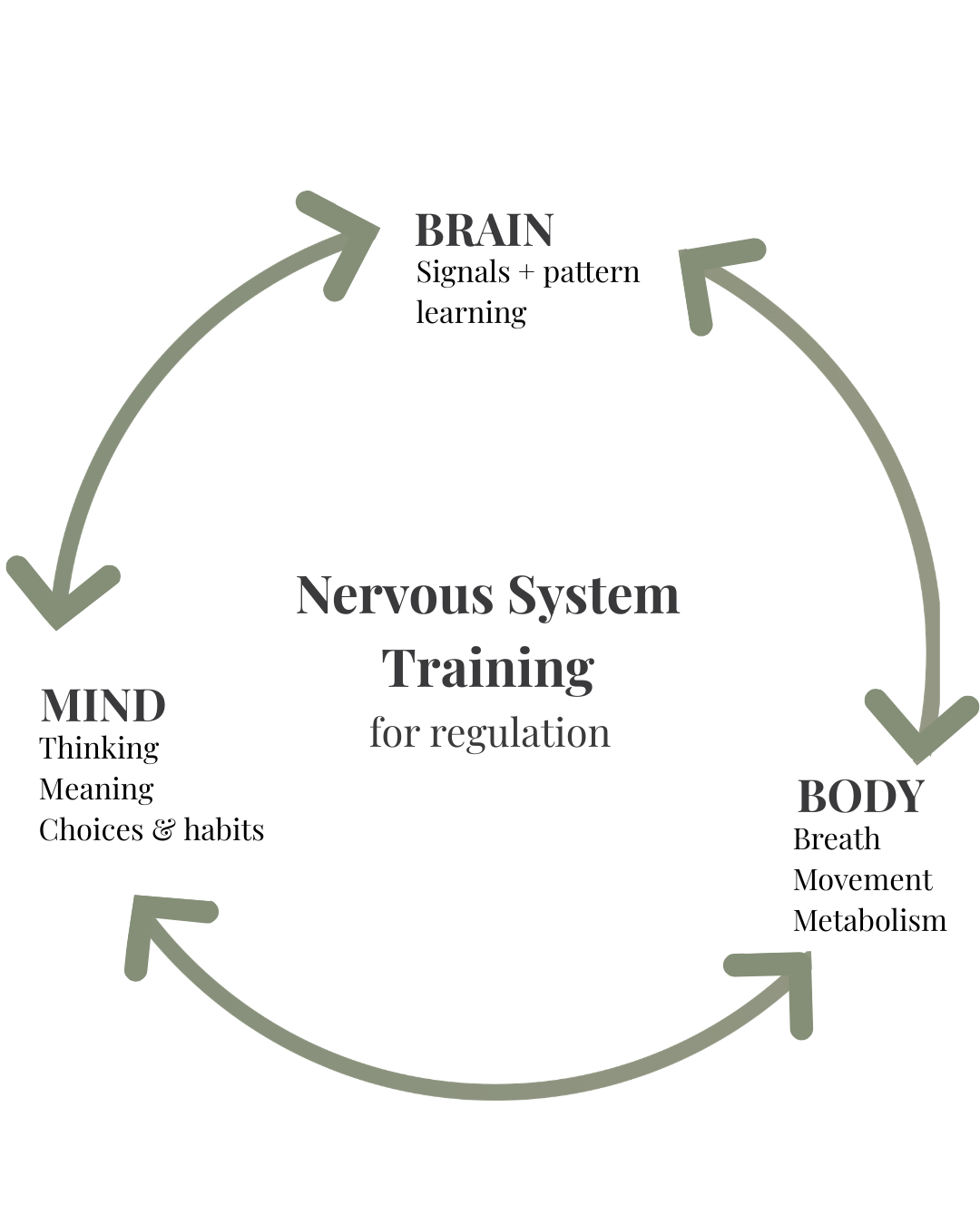
Fatigue is often both psychological and physiological, so recovery needs to be integrated.
It can live in:
-
the mental load you carry and how your mind stays “on”
-
the roles and habits that keep you overextended
-
the way your body is breathing, bracing, and recovering
-
the way your body’s ability to generate is coping with demand
That is why BodyMindBrain works across mind, brain, and body, to restore capacity, not just behaviour and lifestyle changes.
Psychological support: reducing overload and restoring agency
On the psychological side, we focus on:
-
making your patterns visible (including pressure, perfectionism, responsibility bias, anxiety reactions)
-
reducing chronic cognitive load and internal urgency
-
building boundaries and decision structures that lower strain
-
supporting a steadier internal relationship with yourself (less push/crash)
This helps you remain ambitious and capable, without your nervous system paying the price.
Physiological support: regulation, oxygen efficiency, and physical capacity
Depending on your needs and suitability, we may integrate:
Neurofeedback (neuroregulation)
To support steadier brain and central nervous system activity linked with improved recovery, better stress regulation, and clearer cognition.
IHHT / Altitude Training (recovery capacity)
To support oxygen efficiency and physiological resilience, particularly where fatigue and stress physiology are intertwined.
EMS, strength and movement-based work (capacity and embodiment)
To rebuild strength and reduce bracing patterns so that everyday life generates less “effort signal” and feels more manageable.
Together, this approach helps your system recover and perform differently, not just cope harder.
When to speak to your GP
Please speak to your GP if fatigue is unexplained, persistent, or not improving, or if you have symptoms that concern you.
Fatigue can be linked to multiple medical conditions, so it is important not to self-diagnose.
Not sure where to start?
I offer a small number of first-step options: mind, behaviour and lifestyle-led, physiology/tech-led, and programme/home routes, to help you build resilience and capacity for life’s demands.
About BodyMindBrain:
At BodyMindBrain, we help motivated adults with high-demand lives build strength, energy, and resilience by training the body, brain, and mind as one integrated system.