
A practical overview of nervous system regulation, common stress-related patterns, and where to start for better sleep, recovery, and resilience.
What is Nervous System Regulation?
In a fast-paced world, it’s easy to normalise feeling switched on, tense, reactive, or flat. Nervous system regulation is simply your body’s ability to respond to stress, settle afterwards, and recover well enough to meet the next demand.
In essence, regulation is about flexibility: being able to mobilise when needed, then downshift again so sleep, recovery, and clear thinking remain accessible.
When under sustained pressure, people often notice patterns such as difficulty switching off, light or broken sleep, feeling tired yet unable to switch off, tension and bracing, shallow or effortful breathing, and a lower capacity to handle everyday demands. Long-term stress and adversity can make these enduring and learned self-protective patterns.
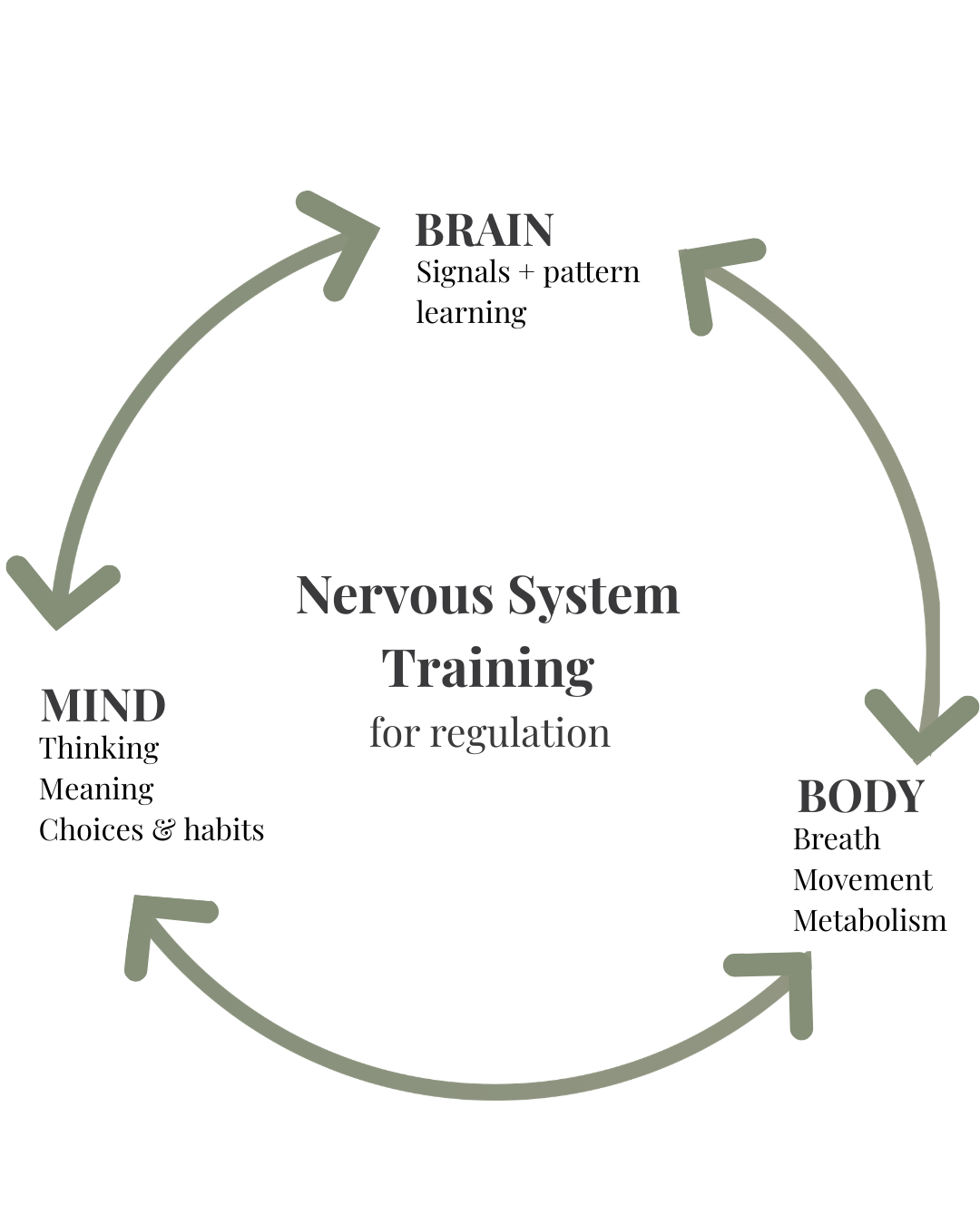
At BodyMindBrain, nervous system regulation is approached as a whole-system training issue involving body, brain, and mind, including stress patterns, recovery habits, breathing, physiology, movement, thinking patterns and the conditions that support a steadier regulation baseline.
What nervous system dysregulation often feels like
People searching for “nervous system regulation” are often describing a pattern rather than a single symptom. You may be functioning, working, parenting, and getting through the week — but not recovering properly.
Common signs include:
-
difficulty switching off at night
-
waking in the night or waking unrefreshed
-
feeling tired but “too alert” to rest properly
-
persistent muscular tension, bracing, or jaw/shoulder tightness
-
stress reactivity, irritability, or feeling easily overwhelmed
-
dips in focus, clarity, or mental stamina
-
breathing that feels shallow, upper-chest dominant, or “not settling”
-
energy instability (afternoon crashes, second wind at night)
These patterns do not always improve by trying to “relax” harder. In many cases, they reflect a stress–recovery imbalance that needs a more structured approach across many bodily systems, with the nervous system as the central communication hub.
Why is nervous system regulation hard to restore
Nervous system regulation is influenced by more than mindset alone. Sleep disruption, altered breathing patterns, prolonged stress load, reduced recovery opportunities, physical deconditioning, and ongoing overactivation can reinforce one another.
This is why short-term calming tools can help in the moment, but often do not fully change the pattern on their own.
A more effective approach is to look at the system underneath the symptoms:
how stress is being carried physiologically, how recovery is (or isn’t) happening, and what needs to change to support a steadier regulation baseline.
Where to start: choose the route that fits your main difficulty
If you’re dealing with nervous system regulation issues, the best starting point depends on what is most affected right now.
1) Sleep difficulties and night-time overactivation
If your main issue is difficulty switching off, night waking, or unrefreshing sleep:
-
Start with: Sleep & Stress Recovery Consultation
2) Stress Load, Energy, and Fatigue
If you are functioning but feel more tired, reactive, or stretched by ongoing demands:
-
Start with: Fatigue and Low Energy
3) Breathing patterns, over-breathing, and poor downshift
If stress has changed the way you breathe (day or night), or you feel your breathing has become shallow and stress-reactive:
- Explore: the Functional Breathing 6-week course
4) Want a structured programme rather than a one-off consultation
If you want a guided process with a clear sequence of support:
-
Explore programmes:
5) Want the deeper theory and full framework
If you want a more detailed exploration of Nervous System Regulation Training, then these reads are a good place to start:
How nervous system regulation is supported at BodyMindBrain
The aim is not to chase isolated symptoms, but to improve your body and mind’s ability to recover after stress and maintain a stronger baseline over time.
Depending on your needs, this may include:
-
stress and recovery pattern assessment (what is driving the load and what is missing)
-
practical psychology and behaviour change (habits, thinking patterns, boundaries, work/home structure)
-
functional breathing support (breathing mechanics, over-breathing patterns, night-breathing considerations)
-
physiological support such as neurofeedback or IHHT (where suitable)
-
strength, movement, and physical capacity work (to reduce bracing and improve resilience)
This is a practical, integrated approach focused on regulation, recovery capacity, and sustainable performance in daily life.
Looking for help with Nervous System Regulation?
About BodyMindBrain:
At BodyMindBrain, we help motivated adults with high-demand lives build strength, energy, and resilience by training the body, brain, and mind as one integrated system.