Sleep Difficulties & Stress-Related Sleep Disruption in Brighton & Hove
Book a Sleep & Stress Recovery Consultation
Support for Busy Adults with Sleep Difficulties
A stress-informed approach to difficulty switching off, night waking, and unrefreshing sleep.
Sleep difficulties are one of the most common signs that your system is carrying more stress than it can fully recover from.
You might be “functioning” during the day, but nights are fragmented, your body won’t settle, or you wake feeling like you’ve barely recovered. Over time, that doesn’t just affect sleep, it affects energy, mood, resilience, and performance.
This page will help you understand what may be driving your sleep disruption and how to start working with me in Brighton & Hove.
Common signs of sleep difficulties I see
You may recognise yourself in some of these:
-
Difficulty falling asleep (your mind or body won’t downshift)
-
Waking in the night and struggling to get back to sleep
-
Early waking (often 3–5am) with a racing mind or tension
-
Sleep that looks “long enough” but still feels unrefreshing
-
Daytime fatigue, brain fog, reduced motivation or low mood
-
Increased irritability, emotional reactivity, or anxiety
-
Reliance on caffeine to function, then difficulty winding down late
The goal is to restore your ability to downshift reliably, so sleep becomes deeper, and recovery becomes more consistent.
Sleep is an output of the stress-recovery balance
Sleep problems are rarely caused by a single factor. Hormonal changes, breathing disruption, nervous system hyperarousal, work and life aversities, metabolic instability, conditioned sleep alertness, and a prolonged stress recovery deficit can all play a role. At BodyMindBrain, the assessment looks at a wide range of contributing factors to identify the most likely drivers of your sleep and wakefulness patterns and to focus on what is trainable: down-regulating stress physiology, day-to-day stress management, functional breathing habits, thinking styles, stress reactivity, day–night wind-down, and recovery habits.
Why can’t I switch off at night?
If your nervous system has been running in high demand all day, your wind-down can be unreliable. Even when you want rest, your brain and body may still be signalling the need to be switched on and vigilant.
That’s why simple sleep hygiene often doesn’t work. Restoring sleep often require a mix of psychological, physiological and behavioural changes.
Why do I wake up at 3am or 4am?
Early waking is common in people under prolonged stress. It may involve stress hormone timing, breathing patterns, blood sugar instability, mental load resurfacing, or a nervous system that can’t wind down or mobilises too easily. The assessment helps us identify which of these is most likely in your case.
Circadian rhythm and sleep
Your circadian rhythm is your internal 24-hour clock. It influences sleep-wake timing, temperature, hormone release, and energy.
When stress is chronic, the circadian rhythm can become disrupted, making it harder to feel sleepy at the right time, harder to stay asleep, and harder to reach deep restorative sleep. The result is a feedback loop: poorer sleep increases stress sensitivity, which makes sleep more fragile again.
How sleep difficulties impact the nervous system
Persistent sleep disruption tends to keep the system closer to “fight or flight,” while the “rest and repair” branch becomes harder to access. Over time, this can contribute to:
-
heightened stress sensitivity and anxiety
-
reduced emotional resilience
-
poorer cognitive performance and decision-making
-
fatigue, irritability, and slower recovery from daily demands
Unless consistent signals are sent back into the brain that the challenge has ended enough to downregulate, your brain learns that remaining switched on is necessary.
What we assess in a Sleep & Recovery Capacity Consultation
This consultation assesses sleep and recovery across 5 domains to identify the patterns that may be maintaining poor sleep, night waking, and low recovery. We look at daytime activation and stress handling, opportunities for recovery and nervous system regulation, physiological stress patterns (such as hyperarousal), functional breathing patterns (including night breathing and red flags for snoring/apnoea), and physical activity, energy, wind-down and sleep patterns. Where relevant, we also explore factors affecting metabolic stability, including caffeine timing, late meals, alcohol, and energy crashes.
Book a Sleep and Stress Recovery Consultation
How to deal with sleep difficulties
Most people try “sleep hygiene” first. It can help, but when sleep disruption is rooted in longer-term stress physiology, you often need a more integrated approach.
In practice, effective sleep recovery usually involves:
- reducing mental load and unfinished cognitive loops
- improving day-time stress regulation, because sleep is often the net result of how your body and brain have handled the day
- retraining the downshift response, so your body can transition from work mode into recovery more reliably
- reducing sleep effort and monitoring, especially if sleep has become a place of frustration, vigilance or “trying”
- supporting physical recovery through appropriate movement / strength / functional breathing
- stabilising sleep timing and cues where possible (circadian consistency)
- supporting metabolic stability (e.g. caffeine timing, evening patterns, exercise)
- building a sustainable structure that fits your life
How BodyMindBrain supports sleep recovery
Sleep difficulties are rarely solved by insight or lifestyle tips alone. They tend to improve when we address both:
-
the psychological patterns that keep you switched on
and -
the physiological capacity of your system to settle, recover, and adapt
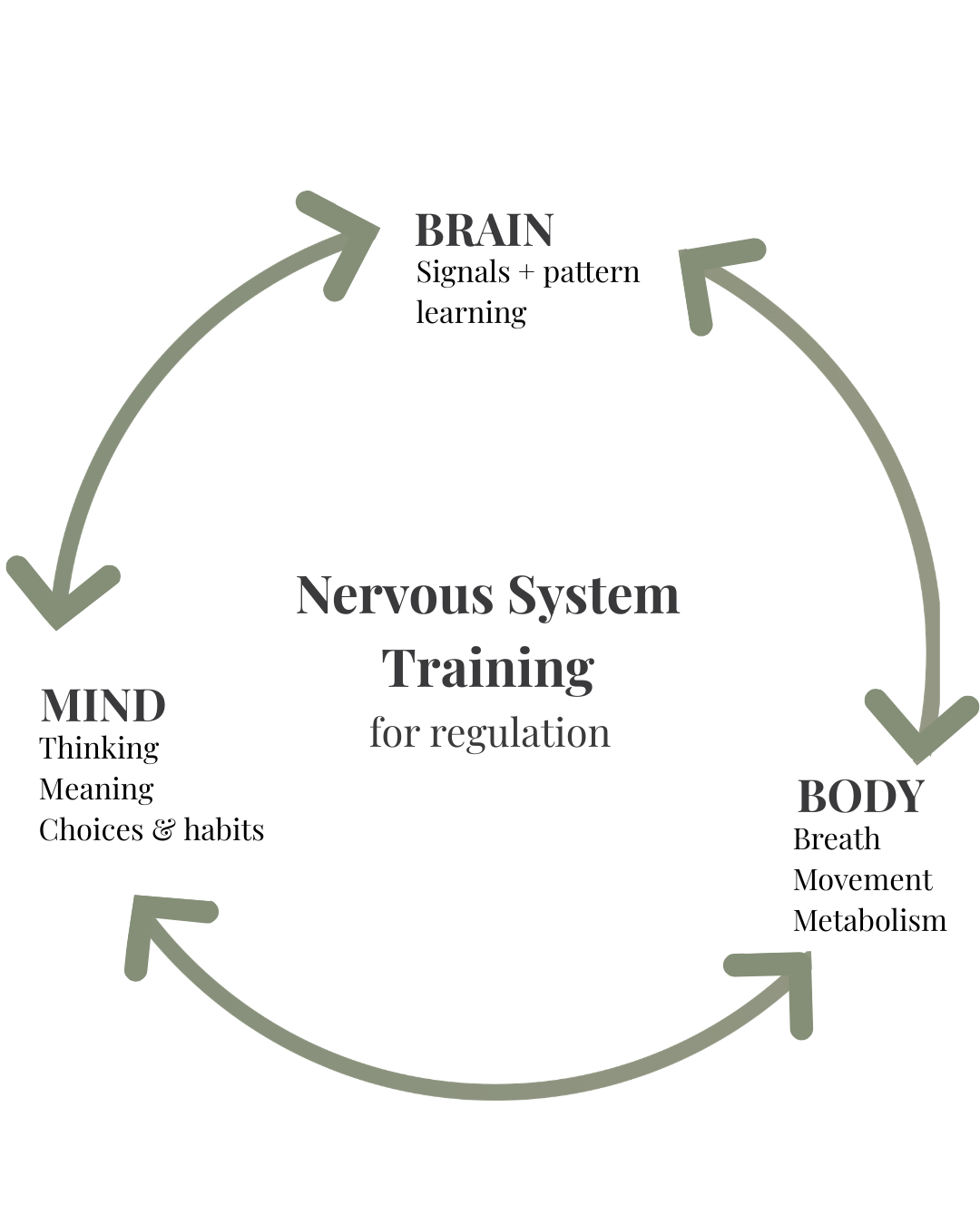
This is why BodyMindBrain integrates mind, brain, and body support.
Psychological consultancy: mapping stress and recovery patterns
On the psychological side, we focus on:
-
making your patterns visible (habits that maintain stress)
- identifying and implementing stress recovery behaviours
- creating structures to protect work-life balance
-
reducing internal pressure, perfectionism, and chronic “on” mode
-
working with hypervigilance and threat scanning
-
building boundaries and decision structures that lower the load
-
creating a calmer relationship with your own mind and body at night
Physiological support: regulation, recovery capacity, and resilience
Sleep improves most reliably when your nervous system can downregulate, and your body is supported in recovering efficiently.
Depending on your needs and suitability, we may suggest:
Neurofeedback (neuroregulation)
To support the brain in practising more stable patterns, often linked with:
-
improved sleep quality
-
reduced reactivity and anxiety
-
improved focus and clarity
IHHT and targeted breathing (recovery and oxygen efficiency)
To support physiological resilience and recovery capacity, particularly when fatigue and stress physiology are driving sleep disruption.
EMS, strength and movement-based work (tension, capacity, embodiment)
To reduce default bracing patterns, support posture and breathing mechanics, and build physical capacity and increase metabolism, so your system feels more resilient overall.
Functional Breathing Retraining
Sustained stress often changes breathing patterns, keeping the body more activated and making it harder to settle for restorative sleep. Where relevant, we assess and retrain functional breathing patterns to improve regulation, mechanics, and efficiency, while also considering night-breathing factors (including snoring, mouth breathing, and apnoea red flags), and signpost onward where necessary.
Together, this approach supports sleep by changing the system underlying it, rather than just trying to ‘fix’ sleep.
When to speak to your GP
If sleep disruption is accompanied by significant mood change, persistent physical symptoms, breathing difficulties at night, suspected sleep apnoea, or anything that concerns you medically, speak with your GP for assessment and support.
My work is focused on stress physiology, recovery capacity, and behavioural/psychological patterns that sustain sleep disruption.
Need help getting your sleep on track?
Book a Sleep and Stress Recovery Consultation.
About BodyMindBrain:
At BodyMindBrain, we help motivated adults with high-demand lives build strength, energy, and resilience by training the body, brain, and mind as one integrated system.