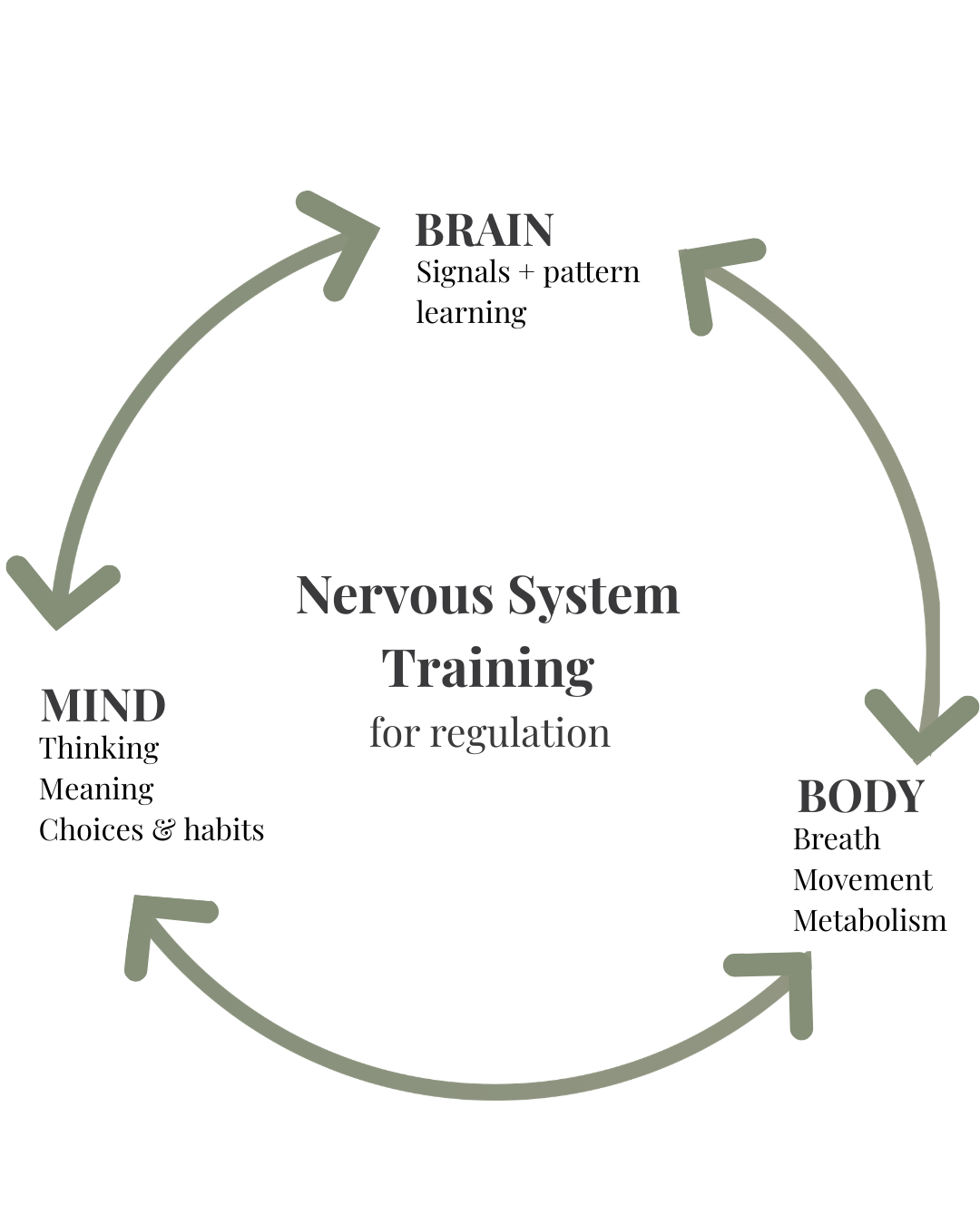
Sympathetic and Parasympathetic Nervous System
What You’ll Learn About the Sympathetic and Parasympathetic Nervous System
-
How these two systems work together to balance performance and recovery.
-
Why nervous system flexibility is the foundation of resilience, focus, and sustained energy.
-
What influences your nervous system and practical ways to optimise it for health and wellbeing.
This post is part of a larger piece about nervous system training for stress and performance.
Click here for: Nervous System Training for Stress and Performance
Understanding the Sympathetic and Parasympathetic Nervous System
Keeping up with the demands of modern-day life requires emotional regulation as well as mental and physical resilience, all of which depend on one key system: your autonomic nervous system (ANS).
Specifically, the sympathetic and parasympathetic branches of the autonomic nervous system (ANS) determine how your body responds to stress, maintains performance under pressure and recovers afterwards.
While many people associate the nervous system with stress or anxiety, it is involved in nearly every aspect of your health, from sleep, breathing and digestion to learning, memory, and even emotional intelligence.
Why Nervous System Flexibility Matters
At its core, your nervous system is designed to help you adapt.
It constantly shifts between two key states:
-
Sympathetic activation (mobilise for action)
-
Parasympathetic recovery (restore and repair)
The ability to move fluidly between activation and recovery is the true marker of resilience.
With modern lifestyles, many people spend their days in sympathetic dominance, mentally alert, stimulated, productive, and physiologically “on alert.” Over time, this constant state of readiness drains energy, shortens recovery, and disrupts sleep, digestion, and emotional balance. Without enough parasympathetic recovery, your body can’t complete the cycle of stress and repair that is essential for long term health.
Being under-recovered means symptoms can appear: muscle tension, feeling drained, brain fog, anxiety, poor concentration, difficulty switching off, poor sleep, impaired digestion and greater susceptibility to colds, amongst many others.
Key processes influenced by the nervous system include:
- Brain growth and development
- Sensations (such as touch or hearing)
- Perception (interpreting sensory information)
- Thought and emotions
- Learning and memory
- Movement, balance, and coordination
- Sleep
- Recovery and rehabilitation
- Stress and the body’s responses to stress
- Ageing
- Breathing and heartbeat
- Body temperature
- Hunger, thirst, and digestion
- reproductive health, and fertility
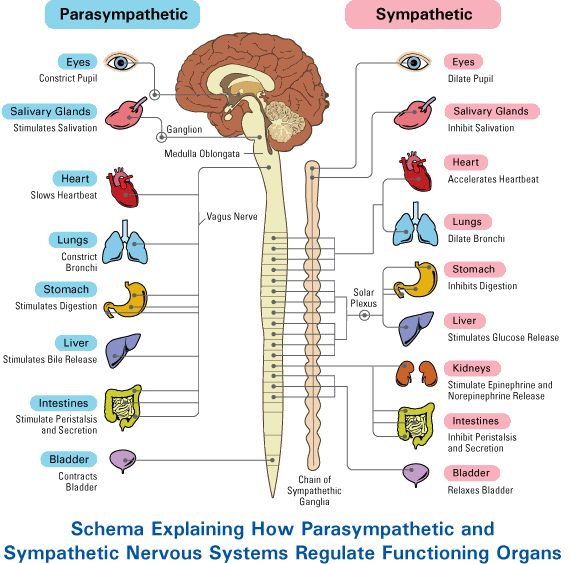
Each branch of the nervous system performs counterbalancing activities within the same organs, with sympathetic arousal preparing us for activity and parasympathetic activity bringing us back to balance after that action.
How the Sympathetic and Parasympathetic Nervous Systems Work
The ANS operates automatically, managing processes that don’t require conscious thought, such as heart rate, digestion, and emotional expression. It has two complementary branches:
-
Sympathetic Nervous System (SNS): Mobilises energy and prepares the body for action, triggering the fight-or-flight response. It is essential for helping us respond to challenges from mundane daily tasks to much bigger threats.
-
Parasympathetic Nervous System (PNS): Promotes rest, recovery, digestion, and repair. It helps bring the body back to baseline after stress and supports long-term resilience.
Optimal performance requires a dynamic interplay between these systems. Like a well-tuned engine, your body should naturally alternate between states of activation and rest, shifting gears and responding to challenges without remaining stuck in one extreme.
What Influences Activation of the Nervous System?
Nervous system flexibility is shaped by a combination of genetic, environmental, and lifestyle factors, including:
-
Stress exposure and life pressures
- Relationship conflicts
-
Physical workload and exercise demands
-
Quality of nutrition, digestion, and hydration
-
Breathing efficiency and cardiovascular health
-
Sleep patterns and circadian rhythm
-
Social connections and belonging
-
Tolerance for uncertainty
-
Past emotional experiences
- Genetics
The vagus nerve, the main component of the parasympathetic nervous system, plays a pivotal role in restoring balance. Optimising vagus nerve function, through breathing patterns, optimising brain function, aerobic capacity and oxygenation, as well as lifestyle strategies, enhances your body’s ability to recover from stress and maintain high-level performance.
Integrating Nervous System Awareness Into Resilience and Wellbeing
Understanding the sympathetic and parasympathetic nervous system is more than just scientific insight, it is a strategic tool for managing stress and remaining resilient. By recognising the signals of overactivation or underactivation, and applying evidence-based strategies to restore balance, you can:
-
Recover faster from stress or exertion
-
Maintain clarity, focus, and decision-making under pressure
-
Improve emotional regulation and resilience
-
Support long-term physical and mental health
For a deeper dive into the parasympathetic nervous system and the critical role of the vagus nerve, explore our dedicated page on Vagus Nerve Function and Polyvagal Theory for Stress and Performance. Understanding and influencing this system is key for high-functioning performance and sustainable recovery.
Why Nervous System Training Is Core to the BodyMindBrain Approach
At BodyMindBrain, we use evidence-based methods to support your nervous system at every level, from brain regulation to oxygen metabolism and muscular strength.
Each tool we use targets a different aspect of stress–recovery balance:
-
Neurofeedback helps retrain brain regulation for calmer focus, improved sleep, and emotional steadiness.
-
IHHT (Intermittent Hypoxic–Hyperoxic Training) improves oxygen efficiency and autonomic balance, boosting cellular resilience and nervous system adaptability.
-
Whole-Body EMS improves muscle activation and physical recovery, improving posture and metabolic function.
- Somatic Movement is a movement discipline helping you to release muscle tension and restore easier movement patterns that support efficient and pain free movement for the long term.
-
Stress and Recovery Coaching addresses the behavioural and psychological patterns that keep your system “stuck on” and under-recovered.
The goal is to restore your nervous system’s flexibility, so your body and mind automatically return to balance when life gets demanding.
About BodyMindBrain:
At BodyMindBrain, we help motivated adults with high-demand lives build strength, energy, and resilience by training the body, brain, and mind as one integrated system.