
Why moving regularly helps us notice and change patterns of tension, effort and stress
When we think about nervous system regulation, attention often turns to breathing, relaxation or techniques intended to make us feel calmer. Movement receives less attention, despite being one of the main ways the brain and body remain in continuous communication.
Every movement involves information travelling in both directions. The brain and spinal cord coordinate muscular activity, while sensory information from muscles, joints and the wider body helps the nervous system monitor position, effort and what is happening around us.
Movement is therefore not only something the nervous system produces. It is also one of the ways the nervous system receives new information.
The Body Learns What It Repeats
The nervous system becomes increasingly efficient at organising the actions, positions and levels of muscular effort we use repeatedly.
This adaptability is useful. It allows familiar movements to become more automatic so that we do not have to consciously plan every step, gesture or change in posture.
However, the system does not necessarily distinguish between a pattern that is helpful and one that has simply become familiar. Repeated ways of sitting, working, carrying tension or organising movement can gradually begin to feel normal—even when they involve more muscular effort than the situation requires.
Stress can become part of this pattern. Under pressure, we may brace the jaw, raise the shoulders, restrict movement, grip through the hands or use more effort to hold ourselves upright. Breathing may also become faster, shallower or less mechanically comfortable.
These responses are not inherently dysfunctional. Short-term muscular activation helps prepare us to respond. The difficulty arises when the pattern is repeated so consistently that the body rarely receives an opportunity to organise itself differently.
What Happens When Much of the Day Is Sedentary?
Modern work often requires considerable mental activity while the body remains relatively still.
Sitting is not inherently harmful, and there is no single posture that must be maintained throughout the day. The greater problem is a lack of variation: remaining in similar positions, using the same muscles and sustaining attention without sufficient interruption.
A person can move from meeting to meeting, or task to task, without physically moving very much at all. The mind changes context while the body continues carrying the muscular effort and activation associated with what came before.
Over time, this can make patterns of tension and effort harder to notice. They no longer feel like something the body is doing; they simply feel like the body.
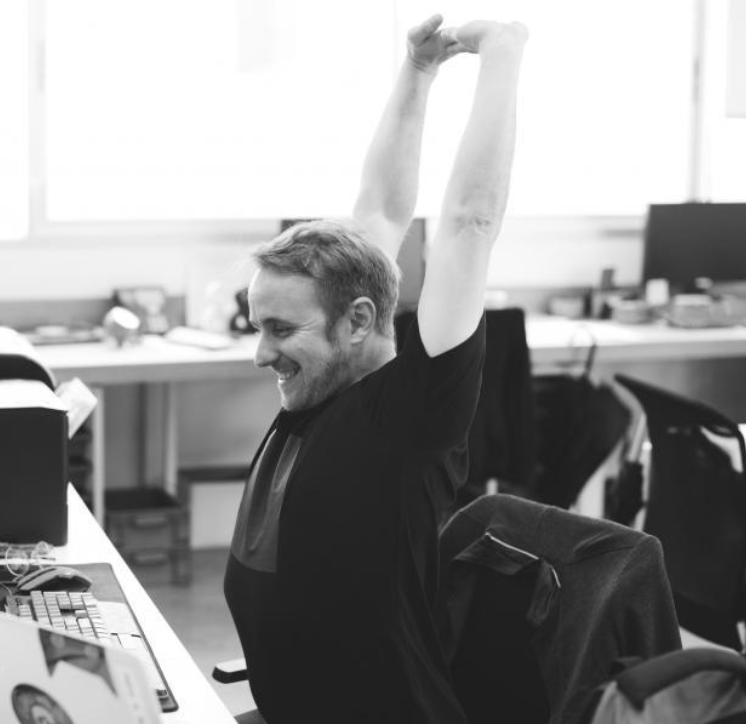
Regular movement introduces variation. Standing up, walking, changing position or moving the shoulders, spine and hips gives the nervous system different sensory and motor information. It also creates a physical transition between periods of cognitive or emotional demand.
Movement Can Change the Conditions for Thinking
Movement does not automatically make every form of thinking better. However, research suggests that it can influence particular cognitive processes.
Walking has been shown to support divergent thinking: the ability to generate ideas, explore possibilities and approach a problem from different directions. This may help explain why a walk can be useful when we feel mentally stuck or need to think more expansively. The same effect has not been found consistently for tasks that require a single precise answer.
There is also some evidence that interrupting prolonged sitting with sufficiently active movement can temporarily support attention, working memory and executive functioning. Findings are mixed, and simply standing up does not appear to produce the same effect. The type, duration and intensity of movement are likely to matter.
The practical point is not that every task should be completed while moving. It is that continuous sitting may not always provide the best conditions for sustained attention or flexible thought. A short walk can provide a useful change of physiological and attentional context—particularly between demanding tasks, during problem-solving or when thinking has become narrow and repetitive.
Movement Helps Us Notice Bracing
Not all movement requires close attention. Walking, gardening, household activity and ordinary changes of position are valuable precisely because they allow the body to do something different.
There is also a role for slower, more conscious movement.
When movement is performed quickly or with a specific external goal, attention is usually directed towards completing the task. We may be less aware of how much effort we are using, whether we are holding our breath or which areas of the body are doing more work than necessary.
Slowing movement down can make these patterns easier to feel.
The purpose is not to inspect or correct every movement. Nor is it to find one ideal way of moving. It is to develop enough awareness to notice when effort has become excessive, when movement is being unnecessarily restricted or when a familiar pattern is no longer serving us well.
This is one reason somatic movement can be useful. It creates an opportunity to explore how movement is being organised without the pressure to stretch further, lift more or achieve a particular fitness outcome.
Movement as Part of Active Recovery
Movement can support recovery without needing to become a workout.
A short walk after a demanding conversation, standing and moving between meetings, or taking a few minutes to mobilise areas that have remained still can create a meaningful transition. It changes what the body is being asked to do and provides a break in an otherwise continuous pattern of attention and muscular effort.
Depending on our state, different forms of movement may be helpful.
When we feel highly mobilised, walking or more rhythmic movement may provide an outlet for some of the energy already available. When energy is lower, gentle movement may help us become more engaged without adding excessive demand. At other times, slower movement may help us recognise and reduce effort that has continued after the original pressure has passed.
Movement is not a guaranteed way to regulate the nervous system, and more movement is not always the answer. What helps depends on the person, their current state and the demands they have already experienced.
The useful question is:
What kind of movement would give my body different information from the pattern it has been maintaining?
Movement and Strength Have Different Roles
Regular movement and physical strength support one another, but they do different jobs.
Movement throughout the day provides variation, interrupts prolonged stillness and helps maintain contact with different ranges and patterns of movement. Attentive movement can improve awareness of tension, effort and coordination.
Strength training provides a sufficiently challenging stimulus for the body to maintain or develop muscle, tolerate load and preserve physical function. Everyday movement alone may not provide enough resistance to achieve this.
Both matter. Moving regularly helps prevent the body from spending the whole day in one narrow pattern. Building strength increases the physical resources available for meeting the demands of life.
Muscle also has roles beyond producing movement. It contributes to glucose regulation, metabolic health and physical independence, while physical activity affects the brain through several interacting biological and psychological pathways.
The purpose of bringing movement into a nervous system conversation is therefore not to present it as another calming technique. It is to recognise that the nervous system is shaped partly through what the body repeatedly does—and does not do.
Practical Ways to Bring Movement Back Into the Day
This does not require a complicated programme. Useful starting points might include:
- standing or changing position between tasks;
- walking for a few minutes after a demanding meeting;
- avoiding long periods in exactly the same position;
- noticing whether the jaw, shoulders or hands remain braced after pressure has passed;
- occasionally moving more slowly to notice where unnecessary effort is being used;
- allowing the arms, spine, hips and eyes to move in different directions;
- using movement to create a transition between work and personal time;
- maintaining separate strength training appropriate to your health and circumstances.
The aim is not perfect movement. It is to retain variation, awareness and enough physical capacity for the body to remain a useful partner in meeting life’s demands.
In Summary
Movement is part of the continuous communication between body and brain. The nervous system learns through repetition, which means familiar patterns of posture, tension and effort can become increasingly automatic.
A sedentary or demanding day may provide few opportunities for those patterns to change. Regular movement introduces variation, while slower and more attentive movement can help us notice bracing and effort that have become habitual. Walking and active breaks may also support particular aspects of thinking, including attention, cognitive flexibility and the generation of new ideas.
Movement does not replace recovery, strength training or changes to the conditions creating stress. It is one part of a wider approach: helping the body remain connected, responsive and capable rather than asking it to sustain the same pattern throughout the day.
Continue reading: Active Recovery and Stress Recovery Habits
Explore the wider physical foundation: